


All recent surveys agree : in France, there is a general need to upgrade and improve skills in public innovation, particularly when it comes to better preparing future generations of public servants. However, if we aim to progress in terms of public innovation skills in the coming years, then we need to bring together the most motivated players from education and training on the one hand, and research on the other, as well as practitioners in the field, in a kind of “synchronized swimming.”
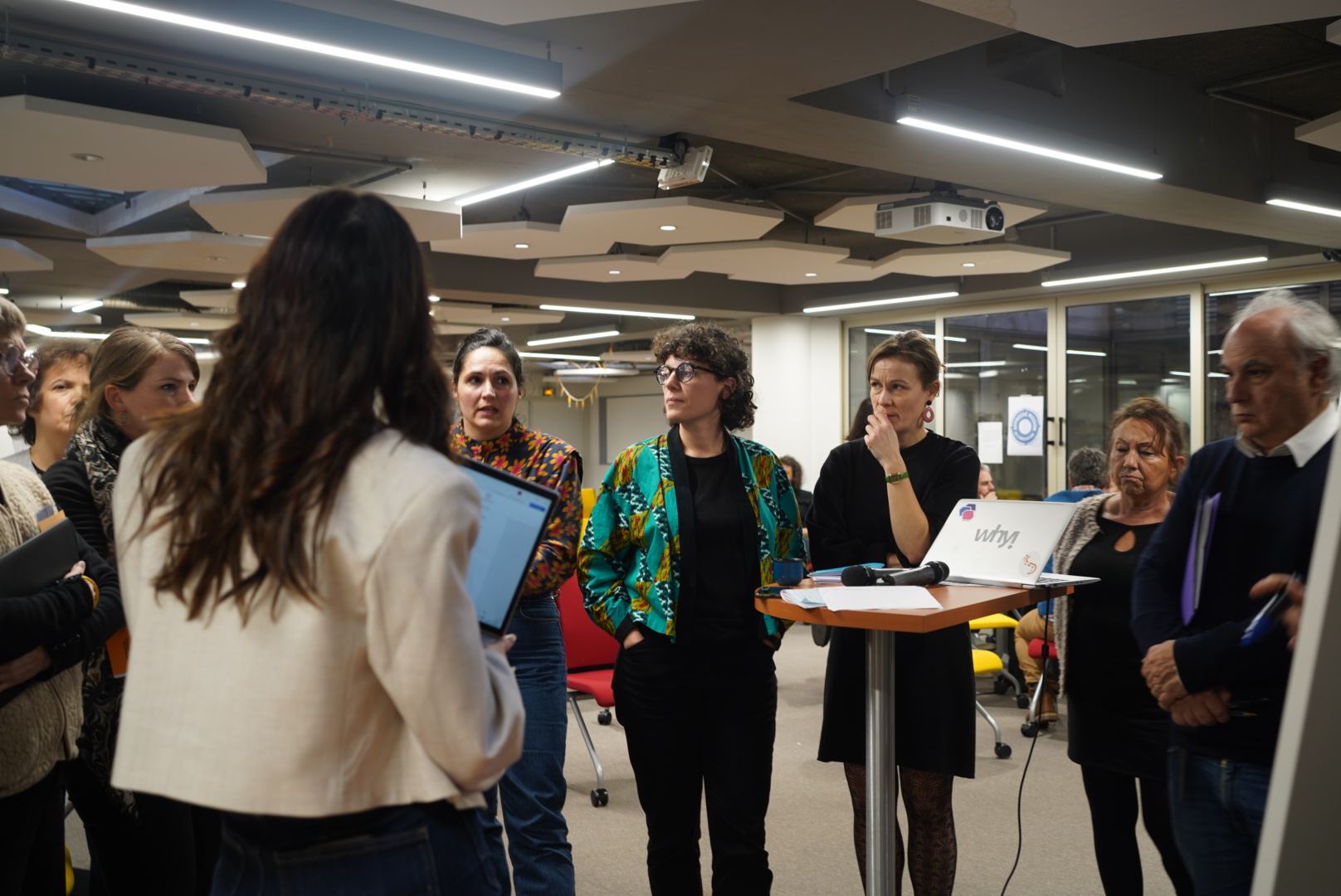
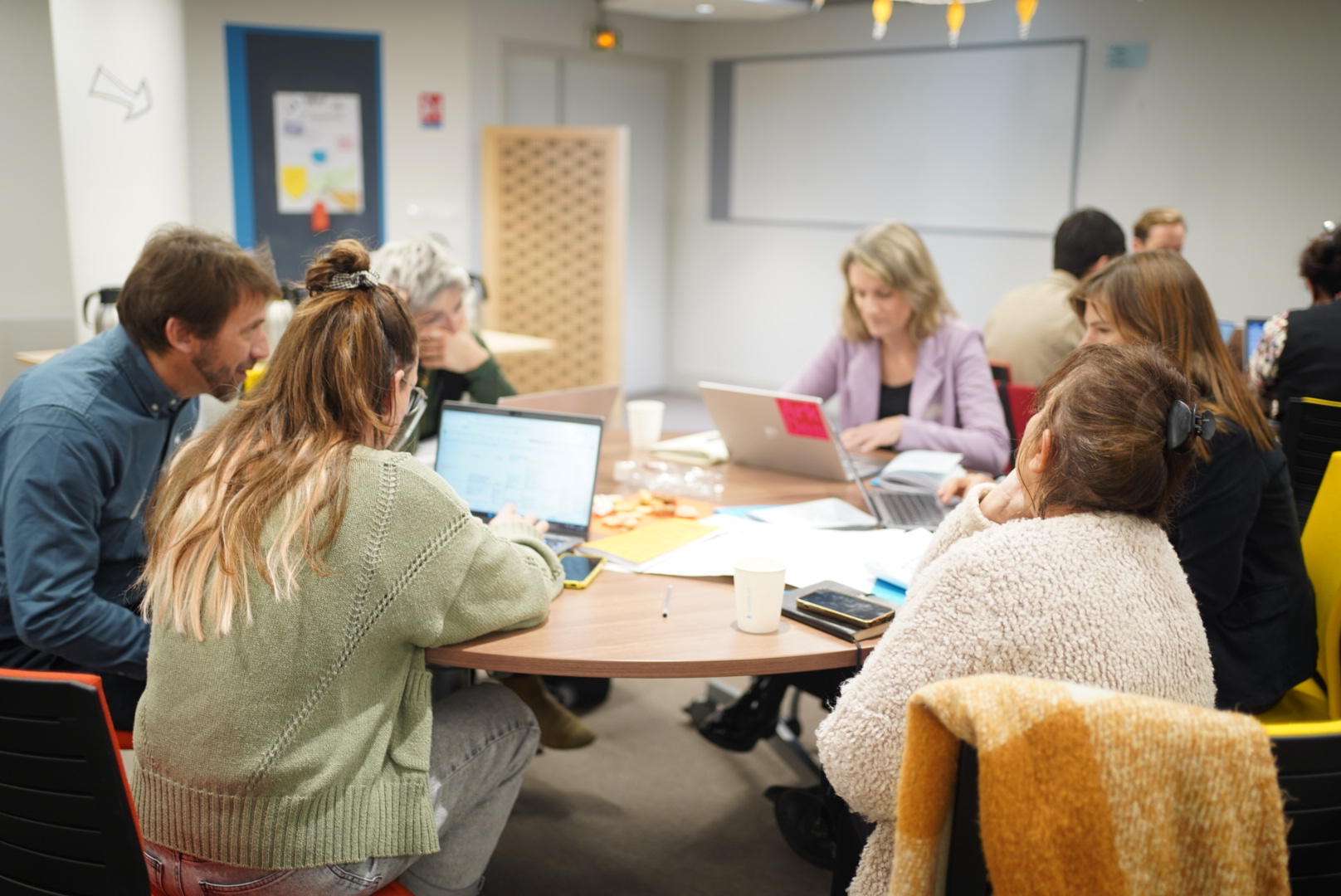
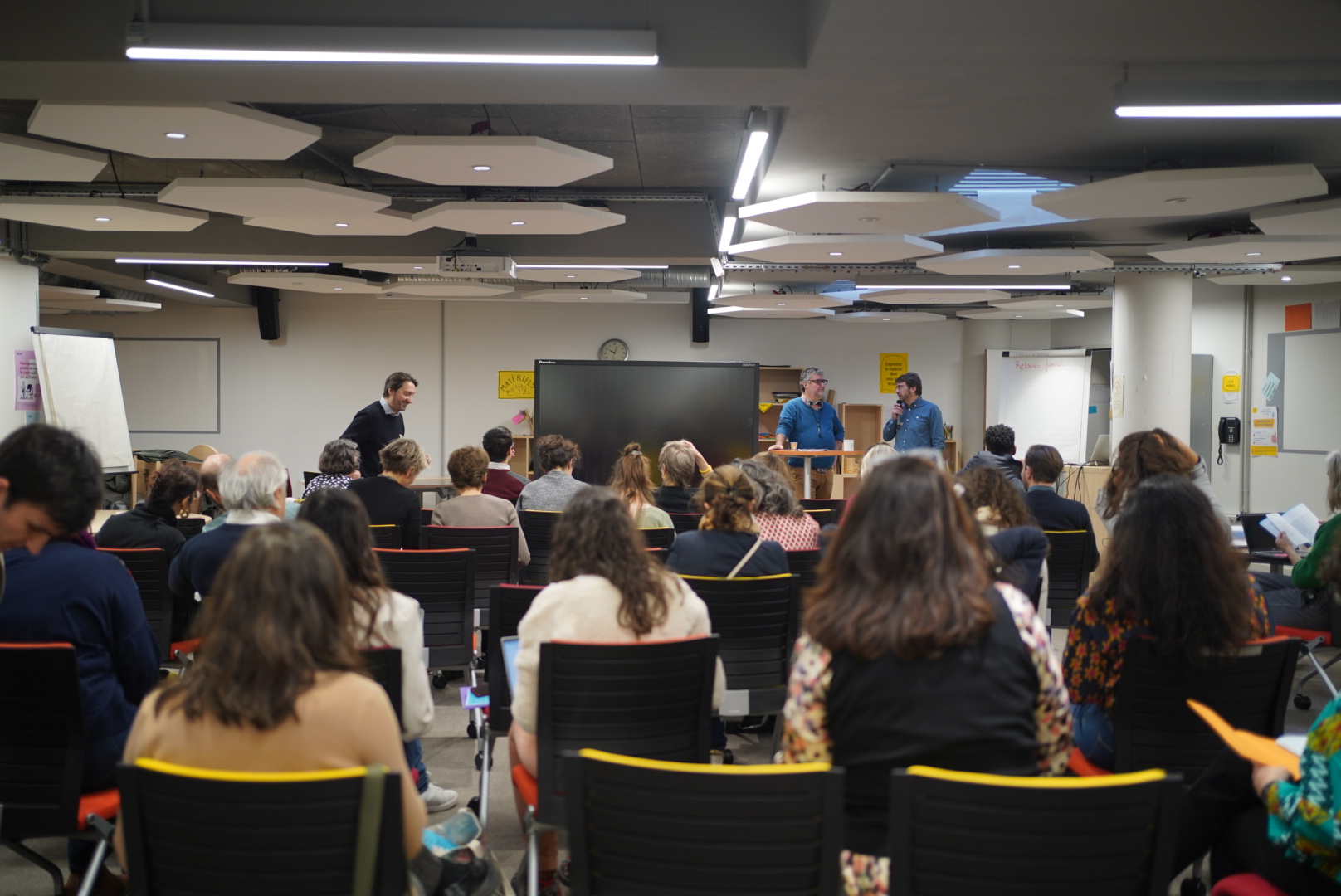
Starting with this aquatic hypothesis, we launched La Synchro, a new experimental program conducted with the CNFPT (the French center for the training of public agents) until 2027. The first session took place at the CNFPT’s educational laboratory in Paris and brought together around 60 participants from public and private training institutions (Sciences Po, CNFPT, INET, INSP, École de design Nantes Atlantique, EHESP, DITP, Cerema, Open Consulting, etc.) and research organizations (Politecnico di Torino, ERPI Laboratory at the University of Lorraine, Sciences Po Lyon, Chair of Public Action Transformations, Practhis Association) as well as the community of practitioners (Val d’Oise department, city of Nancy, Eurométropole de Strasbourg, Bourgogne-Franche-Comté region, Grand Est region, city of Clermont-Ferrand, Occitanie region, Isère Department, Ministry of Economy, Ministry of Transitions, Europmétropole de Metz, Cergy-Pontoise Urban Community, City of Nanterre, Quadrant Conseil, and Ateliers RTT). In this article, we share the feedbacks and lessons from this day, and the follow-up we plan with La Synchro.
FEED BACKS ON THE FIRST DAY OF SWIMMING
In the deep bath of public innovation… This first day served as both a launch and a test, with one main question: Where to start? Or more precisely, what is the minimum knowledge required when starting out in the world of public innovation? To begin answering this question, we first asked ourselves if we were able to recount the history of public innovation. Our very first task was therefore to collectively produce, in “sprint” mode, a timeline of the history of public innovation, from the post-war period to the Macron presidency. This was quite a challenge, even though we had already used this process in the past .
Learning from the past.Once completed, we discussed this timeline. What does it tell us about the successive developments in government reform, the main events that have affected innovation and transformation in the public sector, the flagship programs, and the turning points? The feedbacks from participants were largely positive: “It provides a good overview of public innovation in recent history,” “It allows us to present public innovation not as something new that came out of nowhere, but as a continuation of long-standing administrative action.” Several participants mentioned the educational uses that could be made of this timeline: identifying and exploring past changes, learning lessons for today, or revisiting “old” innovations and giving historians a voice to shed light on them from the perspective of public innovation. It is up to us to come up with a format (poster, board game, articles or interviews in response to the timeline, etc.) that will facilitate such uses of this timeline.
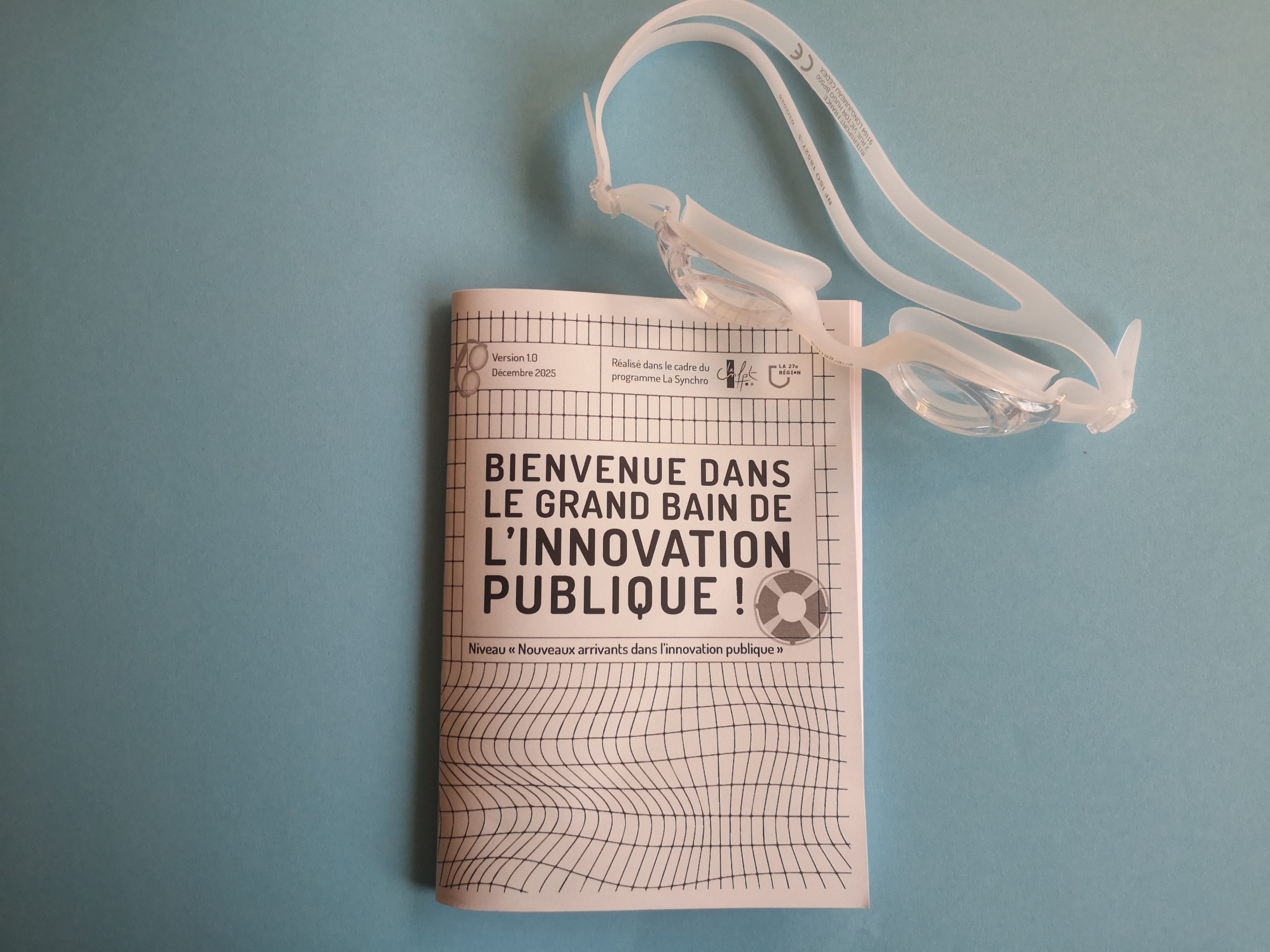
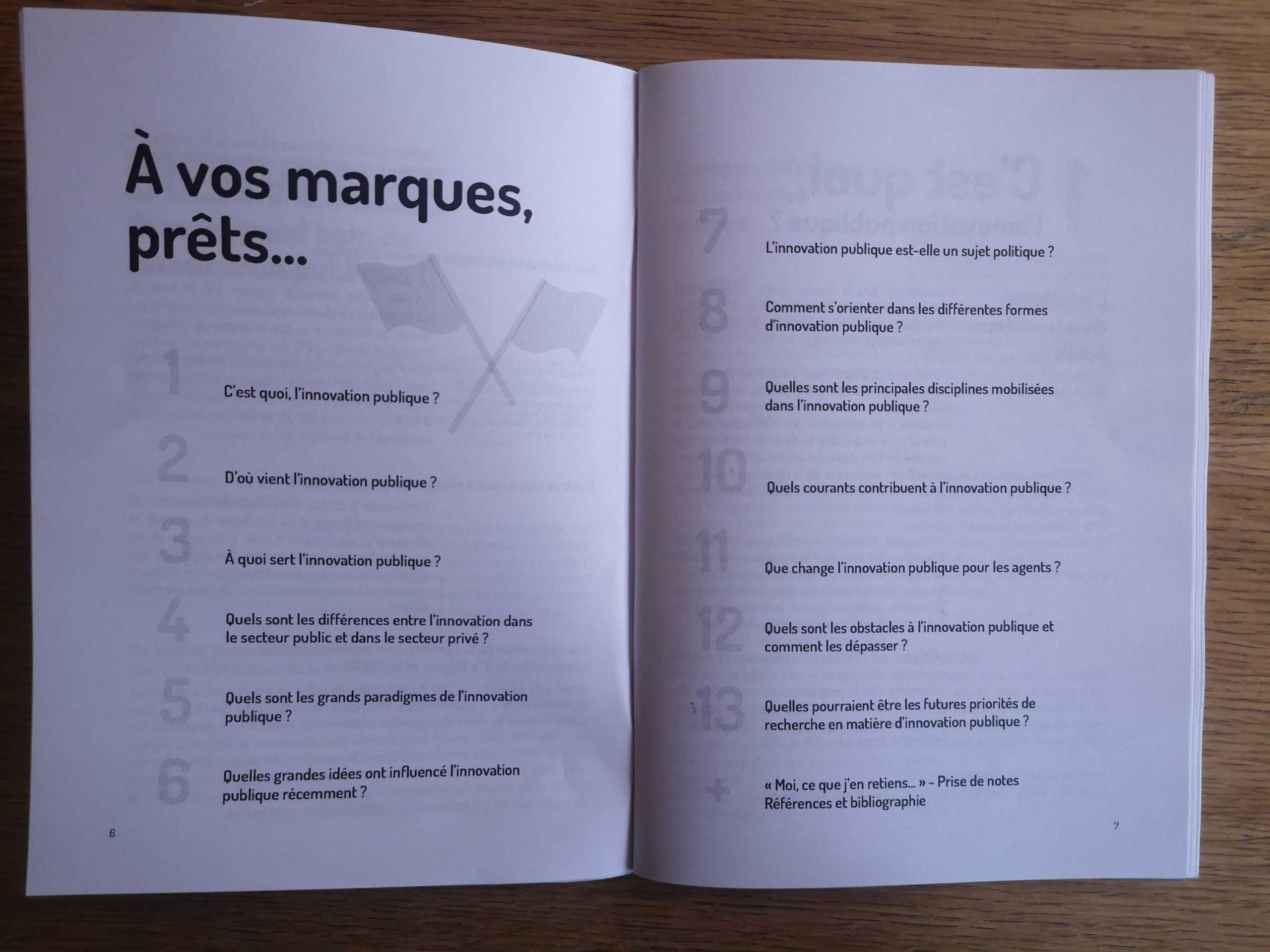
Synchronized swimming around knowledge. The second sequence aimed to verify whether we agreed on the scope of knowledge to be acquired when starting out in public innovation. To find out, participants divided up the chapters of a booklet on public innovation at the “beginner” level, created for the occasion by the 27th Region, based on existing French and international scientific and educational sources. We collected their reactions to each of the 13 chapters of the booklet, from “What is public innovation?” to “What are the obstacles and how can they be overcome?”).
Among the ways in which this could be developed, the following seems particularly noteworthy:
- Making the transformative purpose of innovation more explicit, both for the organization and for the employee themselves in their search for meaning and their ability to take initiative;
- The need to add concrete examples (to fully understand what a systemic problem is, or to illustrate theory with real-world examples) that are representative of the nuances of public innovation (state, regional, hospital).
- An interest in innovation thinkers (“On my to-do list: reread the authors on innovation: diving into the deep end gives you new energy”), which could be expanded (Bruno Latour, Jérôme Denis, Isabelle Stengers, Arturo Escobar, etc.);
- Before embarking on the exploration of what we do not yet know and what could constitute research priorities, provide access to all available knowledge (“a great deal of research and knowledge already exists”) and organize the convergence of efforts between disciplines and between scientific, associative, and public actors… ;
- Include in educational materials what can be expected when embarking on this type of innovation process, and mediate it (expectations vs. reality, so to speak, otherwise the warnings may be discouraging);
- Provide possible uses for shared tools (OECD facets, mapping of public innovation trends, etc.) and enable practitioners to identify their place within these frameworks.
- Beyond the disciplines involved, highlight the skills of public innovators, particularly their ability to understand and mobilize these skills according to the issues and topics at hand.
- Enable innovators to mature: with work to popularize concepts, methods, and theories to get off to a good start.
Avoiding drowning thanks to the lifebuoy of public innovation. The third sequence—somewhat glossed over due to lack of time—aimed to test a compass to help beginners navigate the possibilities offered by public innovation. We started with the “facets of public innovation,” a matrix organized around two axes designed in 2019 by the OECD’s Public Innovation Observatory. In terms of uses, the compass allows us to see all the ways in which a problem can be addressed, while becoming aware of the directions and biases towards which methods and tools push us, but also to determine whether the capacities and skills mobilized in a project are well suited to the need.
The best feedback comes from novice practitioners, while veteran stakeholders find it more limited: “The OECD tool and the overview of all areas of expertise (technical, decision-making, etc.), which, although they may have been debated among ‘experts,’ are very good resources for giving novices some guidance. ”
Feedbacks from the swimming. What did participants think of the day? Overall, the content of the day was well received (3/4 of respondents gave it a thumbs up), but a few weaknesses were pointed out regarding the launch: at the start of the day, some would have liked more time to get to know each other and greater attention to clarifying the objectives of the day “in terms of landing ideas and deliverables.” There may have been some confusion between the objectives of Synchro, those of existing training courses, those of deliverables, etc. However, participants seem ready to repeat the exercise.
WHAT THEORY OF CHANGE FOR LA SYNCHRO?
What effects are expected from Synchro, for whom, how, and based on what indicators of success? The theory of change for Synchro still needs to be explored in greater depth, but several of the key challenges at the heart of Synchro were the subject of comments and proposals during the day.
Beginners and experts. Several participants suggested distinguishing between two types of users, each with their own specific needs: newcomers on the one hand (building a theoretical/current/methodological “corpus” to provide common reference points, a kind of professional culture), and more experienced users on the other (deepening knowledge, progressing, more complex subjects, etc.). In any case, several participants believe that we must continue to think about beginners: “Maintain this ability to identify and structure a rapidly expanding field, otherwise ‘newcomers’ risk drowning in a plethora of content and proposals.” “I appreciate what was mentioned about popularization as a starting point. Popularizing the field of possibilities to enable everyone to better understand it, then gradually broadening it by showing the diversity of practices and concrete applications seems relevant to me. The field of innovation and its players are vast, so an accessible approach is needed to grasp its real scope.”
A space for dialogue between practitioners, researchers, and trainers. Our first assumption is that in order to improve the level of public innovation skills, we need to “resynchronize” practitioners, researchers, and those responsible for education and training. The testimonials gathered during the day confirmed that each of these groups needed this:
- Practitioners need to constantly acquire new skills and ensure that these are up to date with the latest knowledge: “I sometimes feel that I have reached my ‘ceiling’ in terms of theoretical aspects, which gives me some ideas for reading over the Christmas holidays. “
- For their part, researchers need to (re)connect with the needs of practitioners in the field, and ensure that their knowledge feeds into training content.
- As for those involved in education and training, they need to offer content that is both in line with the needs of the field and up to date in scientific terms: “The content contributions and questions raised are a real source of improvement for our programs. What skills should we choose for training in public innovation? What paradigms are presented, and do we choose to present particular trends and why?” Or “Do we have the right people to support our students?”
There were a few down sides, however: some practitioners felt that their voices were somewhat overshadowed by those of researchers and experts, and called for a rebalancing. Others pointed out the risk that once the day was over, “everyone would go back to their silos with highly stimulating but impossible-to-implement ideas.” They therefore proposed creating “testing grounds for practical application (for example, a CT where a training program run by a school is tested, which would have extensions in the CT and be observed by researchers, etc.).”
A space for contribution. Another challenge is that participants are not simply users but also contributers to La Synchro themselves. At the end of the day, practitioners, training providers, and researchers offered to contribute by providing opportunities to test La Synchro: The Occitanie Region is offering an internal training program involving the CNFPT and Montpellier and Occitanie network of public innovators; the CGDD is offering two days of training in public innovation as part of the Higher Cycles of Ecological Transition in Clermont-Ferrand in September 2026; the DITP is offering its CLIP training courses; the Clermont-Ferrand Metropolis is proposing to test a training program run by a school, which would have ramifications in the community and would be observed by researchers; We could also imagine a “sprint” type format to test the OECD’s innovation facets tool, which we didn’t have much time to discuss during the day… On the research side, the new research chair on public innovation (SIPACTE Chair), supported as part of a global ANR Sirius program at the University of Lorraine, is offering to make available “its research resources and a highly motivated team, with the aim of offering a training program for students AND staff at our university.” The practical details still need to be worked out to ensure that these contributions are win-win, but there is already a sense of motivation to contribute.
Sharing existing resources. The first step is to share what already exists: Participants suggest “sharing what is already being done,” “how everyone already talks about public innovation,” “sharing the training modules/materials that we should all have and using this material as a starting point to see what we have in common and agree on this basis,” “making existing initiatives visible, sharing them, and capitalizing on these lessons,” “enabling the collective to inspire each other and foster a dynamic of shared learning,” and “the urgent individual and collective need to continue to capitalize on/disseminate/question practices in order to participate in the creation of this collective memory and keep it alive.”
The production of new resources. Some suggest producing new resources together: “a Que sais-je guide to public innovation,” “a self-assessment tool for training programs to see how they can be improved,” “organizing our own creative bureaucracy festival,” “content that should be included in initial training (IEP/design schools, but also universities and IAE that offer degrees in social sciences/project management),” “a film to change perceptions of public innovation.” This day, conducted in “sprint” mode, showed that it was certainly possible to envisage cooperative production methods, such as writing workshops or ‘sprint’ sessions, collective readings in “surveying” mode, contributions of resources, and the translation of texts (English > French, or even the reverse).
Reflections on pedagogical approaches. Some go even further, suggesting that Synchro should be an opportunity to reflect together on a number of questions: Depending on the context, what are the right choices to make in terms of educational scenarios (beginners, experts, future professionals), learning formats (from the most traditional to the most experimental), and existing training programs, based on the target audience and objectives (e.g., HR managers, managers who need to drive innovation, etc.)? Should specific modules be designed, or should innovation be addressed across the board, as is the case with ecological transition?
Special attention to international dimensions. Noting the relative absence of French people in international exchange and knowledge networks, several participants confirmed the value of integrating this dimension and trying to give it value (for example, “by inviting representatives from the Ministry of Higher Education and Research, the Ministry of Finance, and the Ministry of the Civil Service to raise awareness of this asset and give it the means to flourish”).
WHAT’S NEXT ?
At the end of the day, participants are enthusiastic, but how motivated are they to contribute, particularly in terms of dedicating time and resources to Synchro? As our own resources are limited, our next steps will be to gauge the level of involvement that participants are willing to commit to La Synchro.
Some things we will do immediately
We will check whether participants are willing to devote some time to making corrections to the timeline, booklet, and compass, so that all three can be published and made available in January 2026. This sequence will also allow us to explore possible uses for these different resources.
We will take this opportunity to invite participants to gather the resources they already have and would like to share with the rest of the group (reference materials, guides, training programs, tools, kits).
If this proposal appeals to you, please let us know!
What we will do in early January 2026
We will use all this initial feedback to develop and clarify our theory of change and our evaluation criteria. This will give us a clearer picture of what the second day we will organize in 2026 should look like, and we will have more specific activity proposals, particularly for those who offer us testing grounds.
This work will also help us propose the creation of new resources. Among the ideas suggested, we believe that those that would enable the production of tools that can be used by everyone should be given priority (measurement tools, self-assessment tools, maturity scales, etc.). Thomas Delahais proposes asking a panel of practitioners and experts “What are the five essential things to know about public innovation?” and then analyzing and prioritizing the responses obtained in order to identify a series of main themes and produce measurement tools.
While we wait for all that, let’s practice a little bit more swimming. How about you? 🙂

